Different broker habits
Each business may name, store, retrieve and delete raw files differently.

For finance aggregators and broker networks
SightVault is being built as a self-serve broker portal and a future back-end service that can connect to an aggregator or broker CRM. Brokers keep a retained sighting record and deletion history while raw ID images are held only for a short, defined period.

The network challenge
Raw ID images may sit in email, CRM attachments, local folders, cloud drives and mobile devices. Aggregators need a practical option they can discuss with brokers without forcing every member to rebuild their whole application workflow.
Each business may name, store, retrieve and delete raw files differently.
Each system owner must control its own copy and decide when continued retention remains necessary.
Brokers still need a useful sighting record and deletion history after the photographic copy is removed.
What the network offer can include
SightVault is intended to support individual broker adoption and a later CRM-connected workflow under a separately defined integration scope.
Brokers can upload ID files, create sighting records, search clients, manage the holding window and access retention and deletion logs.
Broker signup links are planned so an aggregator can direct members to the appropriate SightVault onboarding path.
An integration pathway is in development for CRM platforms that want to send permitted files and record metadata to SightVault.
Broker workspace owners can separate upload, raw-image, deletion, report and log permissions across their team.
Planned CRM/API pathway
A CRM and API pathway is in development to support integration with broker systems.
The broker creates a SightVault account and API credentials.
Broker workspaceThe CRM sends ID data to the broker’s SightVault workspace.
Aggregator or CRMThe CRM manages its own deletion of stored ID files.
CRM responsibilitySightVault manages the record, retention and deletion process inside the broker workspace.
SightVault workflowBroker-facing experience
The portal is organised around practical actions: Upload ID, Search ID, Sighting Reports, Retention Log, Deletion Log, Users & Permissions and Settings. Select any software screen to open a larger view.
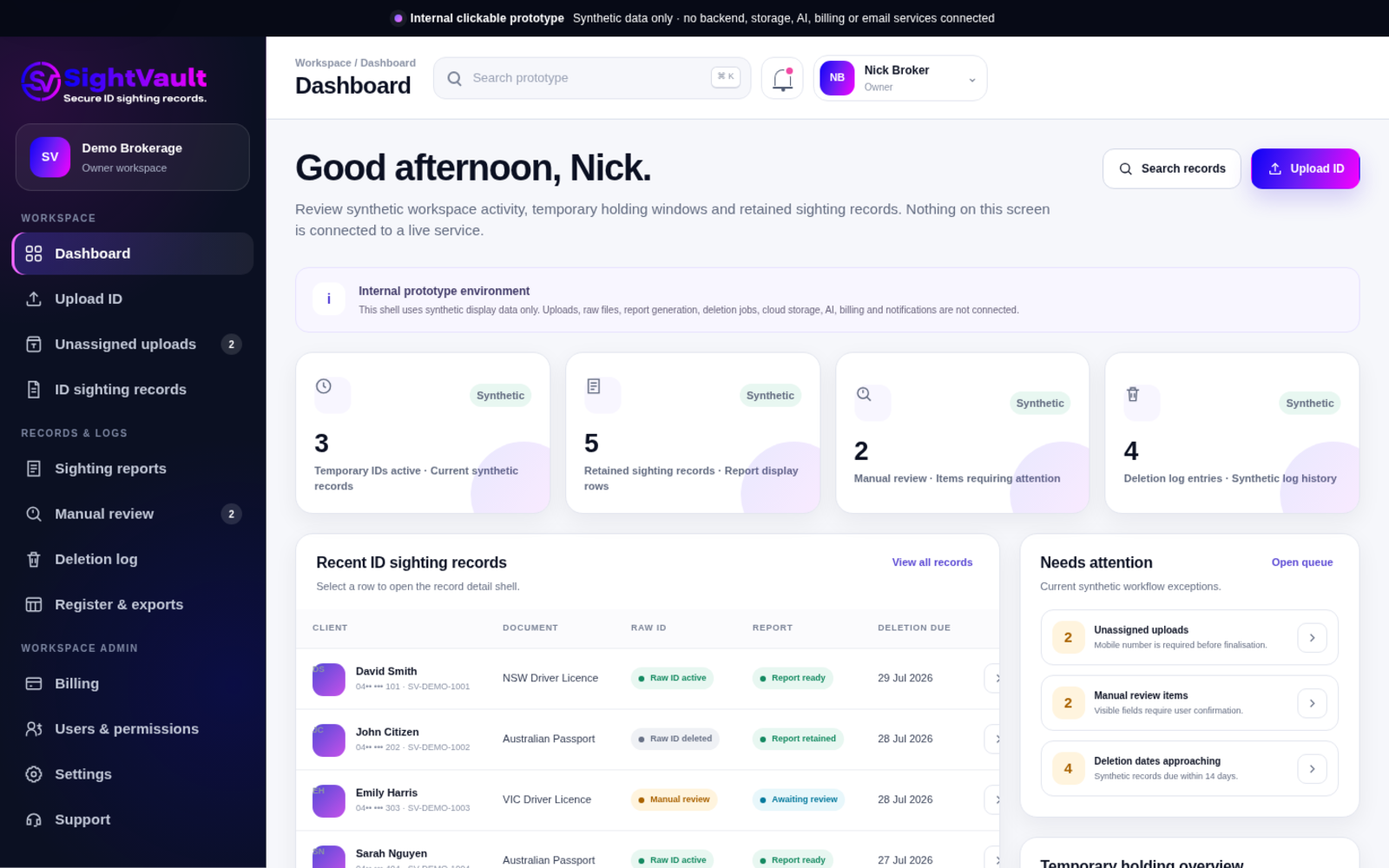
Broker teams can see active raw files, retained sighting records, scheduled deletion activity and items needing attention.
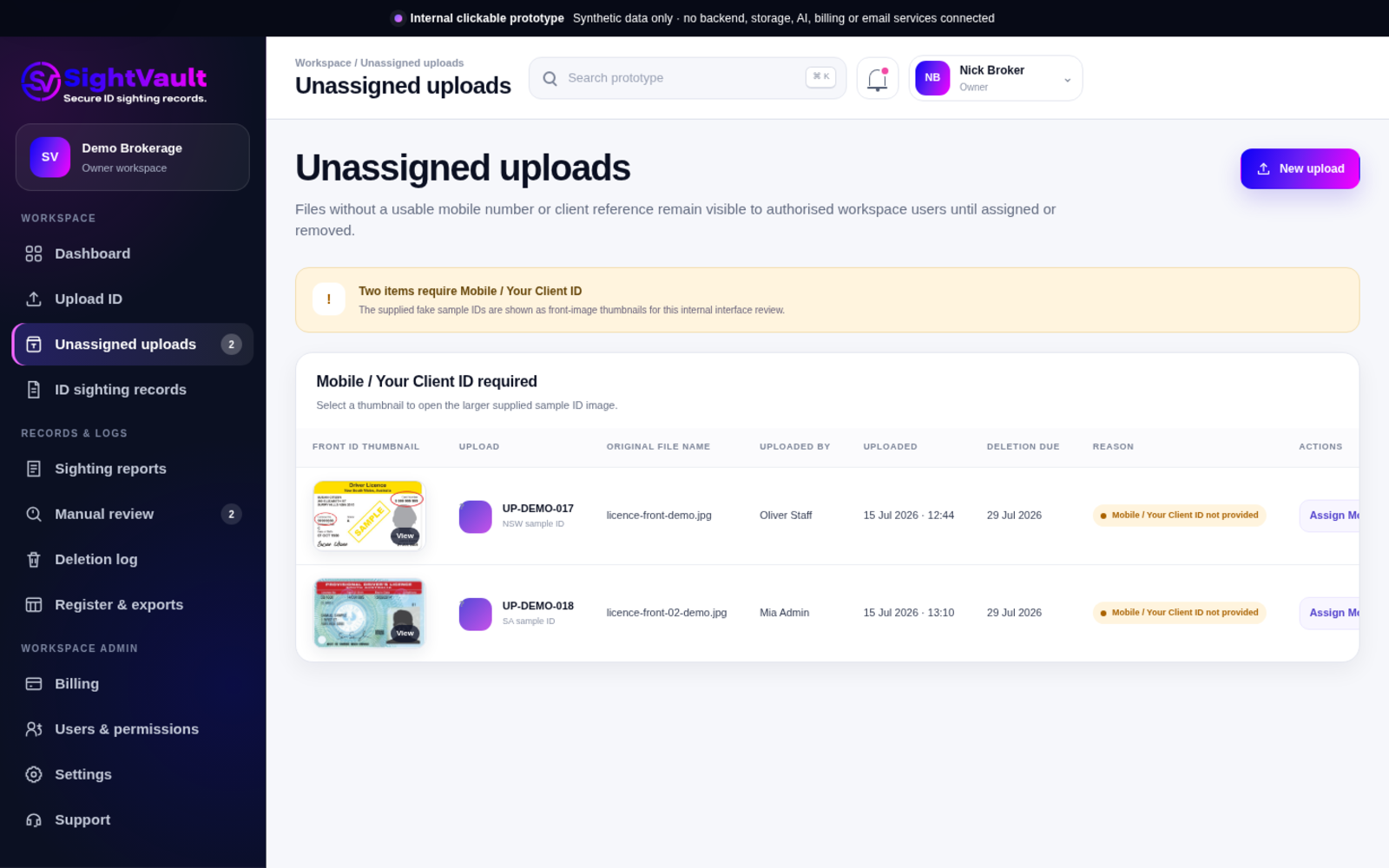
Broker teams can review uploaded files, confirm client details and complete assignment before the record moves forward.
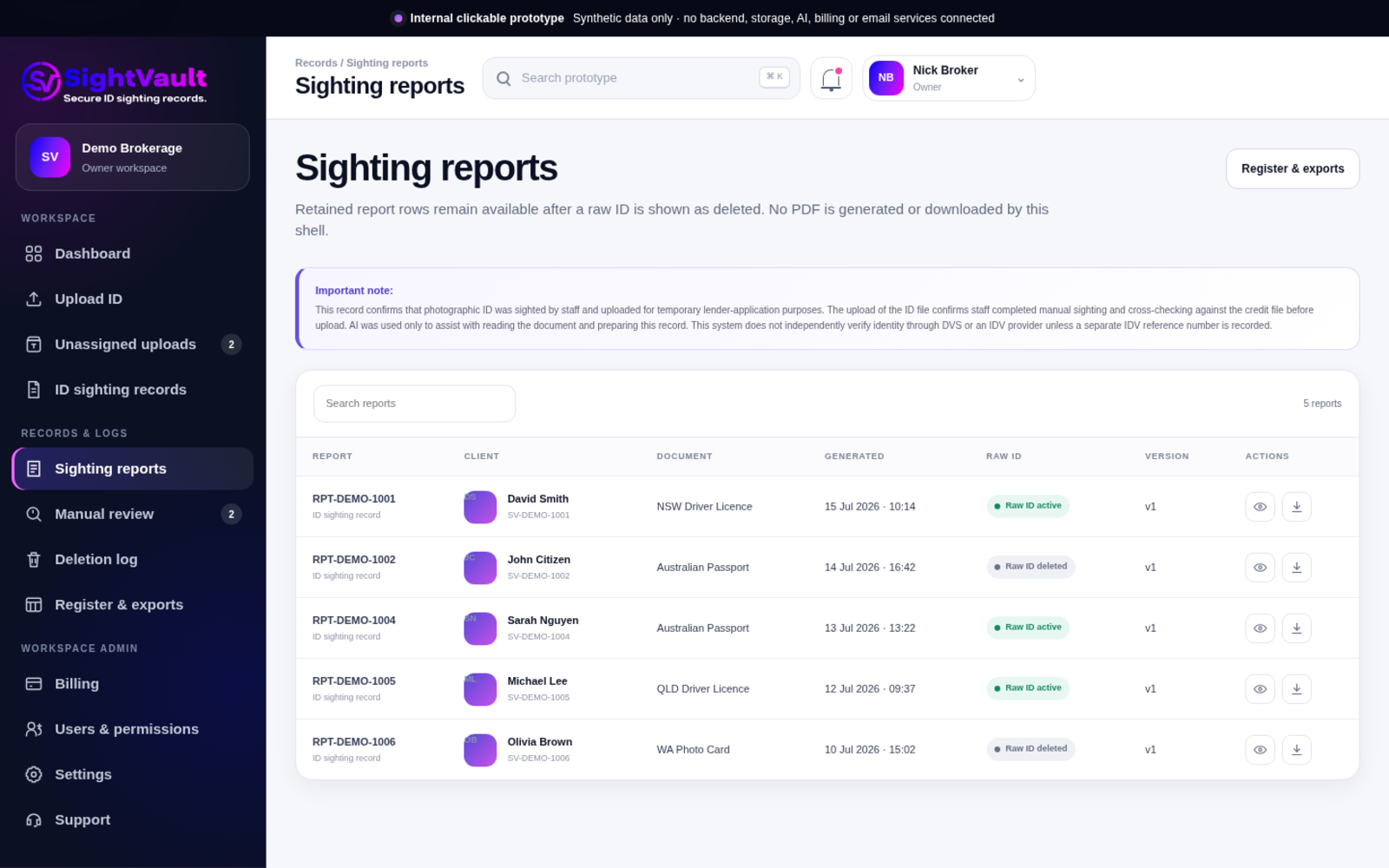
Retained reports and record evidence remain available after the raw image lifecycle has ended.
Potential value to an aggregator
Offer members a dedicated place for temporary ID holding, sighting records and deletion history.
Start self service broker portals, gather operational feedback and define the CRM pathway separate
Document which platform holds each copy, which party removes it and what record remains.
Workspace permissions support different roles for upload, raw ID access, manual deletion, reports and logs.
Important product boundary
SightVault’s role is limited to its record and temporary-holding workflow. Each aggregator, CRM owner and broker remains responsible for the systems, copies and obligations it controls.
Aggregator FAQ
The answers describe the planned direction. A real integration would require a separately agreed scope and technical review.
No. The pathway is in development. The current product direction includes a broker portal first and a connected CRM workflow developed with the relevant aggregator or CRM team.
The CRM owner would add its own front-end action and code to send permitted files and agreed metadata. It would also remain responsible for controlling and removing copies retained in its own systems.
SightVault is intended to create the sighting record, hold the raw file for the configured period, allow earlier deletion by authorised users, automatically delete any remaining raw image within 14 days and keep the relevant records and logs.
Yes. The self-serve broker portal is the first access model. Broker signup links are planned for network distribution.
Broker workflow, CRM ownership, files and metadata to be transferred, access permissions, deletion responsibility, rollout group, support model and the evidence needed before implementation.
The current owner target to full launch is 5–8 weeks. Timing remains subject to completion, testing and review.
Start the conversation now
Bring together the aggregator product, compliance, technology and broker-support contacts to assess fit and define the right next step.
Aggregator and CRM enquiry
Use this form for business and integration enquiries only. Do not include customer, applicant or ID document information.